
Motorcycle Anti-Theft Devices: The Best Way to Protect Your Bike
Protect my motorcycle with GeoRideThere is no single best motorcycle anti-theft device, only the right pairing. A solid physical lock, secured to a fixed point, costs a thief time and forces them out into the open. A GPS tracker pings your phone at the first vibration and shows you where the bike is if it leaves anyway. One without the other leaves a gap open; together they cover the run-up to a theft, the theft itself and everything after.
The essentials
- No physical lock stops a battery-powered angle grinder: reckon on roughly 15 seconds per cut, even on a certified U-lock.
- 90 to 95% of thefts are lift-away theft, according to French motorcyclists' insurer Mutuelle des Motards: the bike gets picked up and loaded into a van without the engine ever turning over.
- A physical lock buys time and makes the job awkward; a GPS tracker tells you in real time and takes you straight to the bike.
- In the 2026 GeoRide Theft Report for France, more than one theft in two ends the moment the alert fires: the bike never even moves.
What is a motorcycle lock actually for?
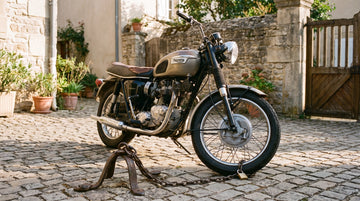
A lock is there to make a theft longer, louder and riskier for whoever tries it, not to make it impossible. That difference matters: picked well and used properly, a lock moves your bike out of the "easy target" bracket and into the "more hassle than it's worth" one, and plenty of thieves simply walk on to the next bike.
The scale of the problem sets the scene: 15,975 motorcycle and scooter thefts were reported and compensated in France in 2025 according to GIE Argos, the French insurers' vehicle body, and the real figure climbs to 55,000 or 60,000 a year once Mutuelle des Motards data is folded in, which works out at one bike gone every 10 minutes. Another myth worth binning: theft is not just a street thing. Roughly half of all thefts happen in places people file under safe, shared garages and residential basements at the top of the list.
Against that, a good setup works on three fronts: visual deterrence (a bike that clearly looks protected draws less attention), delay (every extra layer adds time and noise) and the alert (knowing something is happening while it happens). Physical locks are excellent at the first two. The third one needs something connected.
What are the main types of motorcycle anti-theft device?
Four broad families share the shelf: physical locks, disc locks with or without an alarm, standalone alarms and GPS trackers. Each one has a job it does well, and not one of them covers the whole picture on its own.
| Type of device | What it does well | Where it stops |
|---|---|---|
| U-lock or chain lock + fixed point | Rules out a lift by hand, forces a thief to cut, puts people off on sight | Gives way to an angle grinder in a few dozen seconds, heavy to carry around |
| Disc lock (with alarm) | Light, on and off in seconds, the alarm version adds noise | Does nothing to stop the bike being lifted, and the noise never reaches you |
| Standalone alarm | Makes noise where it counts, can scare off a chancer | Only warns whoever is nearby: out of earshot, nobody does anything |
| Connected GPS tracker | Real-time alerts on your phone, real-time location, you can still act after the theft | Holds nothing in place: it works alongside a physical lock |
The table makes the point: physical and connected are not competing, they finish each other's work. That is exactly the reasoning we lay out in our piece on why a chain lock and a GPS tracker belong together, and if you are still torn between the two approaches, this GPS tracker versus physical lock comparison puts the choice flat on the table.
Does a certified lock really stand up to an angle grinder?
No, and this is the hardest myth to kill in the whole aisle: against a modern battery-powered angle grinder, a certified U-lock gives way in about 15 seconds per cut. The "2 minutes of resistance" everyone repeats comes from the certification test, which is run with a hand saw. Meanwhile the average theft is over in 2 minutes 30 seconds, and no thief turns up at a bike with a hand saw.
So should the U-lock go in the bin? Not at all. Secured to a fixed point it keeps two things that matter: it rules out a lift by hand (with nothing anchoring the bike, a theft takes under a minute) and it forces a thief to get a tool out, throw sparks, make noise and stand there in full view. Every second you take off them counts.
The takeaway is that raw mechanical resistance is no longer enough on its own. A properly equipped thief gets through in the end, every time. So the real question shifts: will you know while the grinder is running, or three hours later? That is where real-time alerts change what kind of problem you are dealing with.
How do thieves really go about it?
In 90 to 95% of cases, according to Mutuelle des Motards and tracking operators, the bike goes by lift-away theft: the engine never starts. The routine is well rehearsed. They lift the bike, snap the steering lock, load it into a van, then park it in a stash spot to see whether anything on board is connected. Once you picture that, you understand why some anti-theft devices aim at the wrong thing.
A disc lock on its own? It rides into the van with the bike. An audible alarm? It screams in an empty street or a deserted basement while nobody moves, which is exactly what the theft techniques crews use most show. What all of these protections share: they assume somebody attentive happens to be standing next to your bike at the right second.
Reaction time is what settles it. Past 48 hours, law enforcement data puts your odds of seeing the bike again ten times lower. Flip it around: an alert at the very first vibration means you can call the police straight away with a real-time location in hand. Knowing what to do in the first 5 minutes of a theft is often the whole gap between a bike you get back and a claim you file with your insurer.
What does a GPS tracker change next to a traditional lock?
A GPS tracker shifts the balance: instead of taking the theft and finding out at breakfast, you hear about it while it is being attempted, and more often than not that is where it ends. This is deterrence you can measure, not a line of marketing.
51.7%
More than one theft in two called off: in 199 of the 385 theft alerts studied for the 2026 GeoRide Theft Report for France, the alert did the work on its own and the bike stayed put.
And when the bike genuinely does move, the vast majority come home thanks to real-time tracking. Set that against the national picture: with no tracker fitted, only 24.3% of stolen motorcycles and scooters are recovered according to the 2025 Argos Barometer, so 3 bikes out of 4 are gone for good. A modern GPS tracker does more than drop a dot on a map now and then, too: where an older tracker reports a position every 5 minutes, a device like GeoRide sends up to 10 positions per second through a corner, accurate to under a meter.
GeoRide's founder lived this before he built anything out of it. In 2017, Thomas walked out on the morning of a road trip and his bike was gone: lock secured to a fixed point, alarmed disc lock, all of it cut clean through. The alarm achieved nothing, he lived two floors up and never heard a thing. The idea that came out of it: let the phone in everyone's pocket raise the alarm instead of a noise that goes nowhere. GeoRide shipped its first connected product in 2018 on exactly that.

How do you stack protections into a full defense?
A good anti-theft strategy works in layers: something physical to anchor the bike against a lift, a GPS tracker for the alert and the location, and parking habits that stop you handing the bike over. Here, in practice, is the combination that covers the most common theft scenario.
Layer one, the physical: a U-lock or a chain lock tying the bike to a fixed point, rear wheel if you have the choice. The point is to take the by-hand theft off the table and force tools into the picture. Layer two, the connected: a tracker tucked out of sight under the seat, invisible to a thief, picking up vibration and movement and alerting you in real time. To pick the right one, our complete guide to motorcycle GPS trackers goes through the criteria that genuinely matter. Layer three, the context: mix up your habits, avoid leaving the bike parked for weeks in the same visible spot, and stay switched on even in a private garage, since half of all thefts happen in exactly those places people file under safe.
One word on insurance to close: plenty of theft policies require a certified physical lock, and a GPS tracker can bring down the premium or the excess with some insurers. So the pair of them ticks the paperwork box as well as the security one.
Where GeoRide fits in
GeoRide is the connected layer of that defense: a device hidden under the seat, wired to the battery, installed in 5 minutes and keeping watch around the clock. At the slightest vibration or the slightest suspicious movement, the alert leaves for your phone as a push notification, a phone call or an email. Even with the wires ripped out, the built-in battery takes over for hundreds of kilometers. And if the theft does go ahead, Theft assistance, available 24/7 in mainland France and included in the subscription, calls you back in under 5 minutes and coordinates with the police, real-time location in hand.
Two devices cover the whole range of needs: the GeoRide 3s (€299, or €14.99/month on rental with no commitment, shipped to France, Belgium, Italy and Switzerland), with Radar detection even underground and Automatic phone recognition, and the GeoRide mini (€199, or €9.99/month), which keeps the essentials of protection. To choose between them, our GeoRide mini or GeoRide 3s comparison covers the whole question. Want noise on top? On the GeoRide 3s, the Live Alarm adds a patented 110 dB siren you can trigger remotely from the app, wherever you are.
"What GeoRide is for is acting fast in an emergency and not thinking about it the rest of the time." (Thomas, GeoRide founder)
FAQ
What is the best anti-theft device for a motorcycle?
The best setup is a physical lock secured to a fixed point plus a GPS tracker with real-time alerts. The lock costs a thief time and rules out a lift by hand, the tracker warns you while the attempt is happening and shows you where the bike is if it leaves. No single device covers all three moments of a theft on its own.
Does a certified U-lock stand up to an angle grinder?
No: against a battery-powered angle grinder, a certified U-lock gives way in around 15 seconds per cut. The "2 minutes" you see quoted everywhere comes from the certification test, which is run with a hand saw. The U-lock is still worth having to block a lift and force noise, but it needs real-time alerts behind it.
Does a GPS tracker replace a physical lock?
No, the two work together. A GPS tracker holds nothing in place: it detects, alerts and locates. A physical lock holds and delays, but it tells nobody. Only the two together cover deterrence, delay and real-time reaction all at once.
Which motorcycle lock should you choose for your insurance?
Plenty of theft policies require a certified physical lock, so check what yours actually asks for. A GPS tracker can also bring down the premium or the excess with some insurers. And report incidents: in the 2026 GeoRide Theft Report, 40.3% of theft incidents never reach the insurer.
À lire ensuite