
How do adaptive motorcycle headlights work through bends?
Protect my motorcycle with GeoRide Par Thomas
Adaptive headlights aim the beam automatically, based on how far the bike is leaning, how fast it is going and how heavily it is loaded. Sensors read your lean angle, a control unit works out the correction, then a motorized mirror or a set of LED modules throw the light into the inside of the bend, exactly where a fixed headlight would carry on lighting straight ahead. The upshot: fewer dark patches and far better vision at night.
The key points
- Sensors for lean angle, speed and suspension height feed a control unit in real time, and that unit decides where the beam points.
- Two main technical families: a motorized mirror inside a xenon projector, and LED modules that fire up segment by segment as the angle builds.
- As standard equipment, the tech is still mostly the preserve of premium tourers and sports tourers (BMW K 1600, Yamaha FJR1300, big adventure and touring machines).
- Retrofitting is doable but pricey, and whatever you fit has to stay type-approved so you don't dazzle everyone else on the road.
What are adaptive headlights actually for on a motorcycle?
Adaptive headlights exist to light the line the bike is really taking, not just the direction the chassis happens to be pointing. That is the whole difference with a car: a motorcycle leans to turn. When you tip into a bend on the side of the tire, a normal headlight is bolted to the machine, so the beam leans over with it. The light shoots off towards the outside of the corner or lands flat on the tarmac, and the inside of the bend, precisely where you are heading, stays black.
On an unlit country road, that shadow hides exactly the stuff that puts riders on the floor: loose gravel, a pothole, an animal crossing. Adaptive headlights fill that hole by straightening or topping up the beam as the bike leans over. You read the corner sooner, you spot the hazard sooner, and you keep a margin to react.
None of this happened in isolation: sensors, control units and onboard electronics have reshaped our machines in the space of a decade, as our article on ten years of motorcycle technology lays out.
How does the system know where to point the light?
It all starts with the sensors, which keep tabs on what the bike is doing. The lean angle sensor, an inclinometer usually built into an inertial measurement unit, reads roll as the bike drops into a corner. Wheel speed sensors track how fast you are going. Some systems add suspension height sensors front and rear, so the setup accounts for the load you are carrying and for what braking and acceleration do to the bike's attitude. All of it travels over the CAN bus, the same internal network that feeds traction control and ABS.

Then comes the brain: the electronic control unit, or ECU. It cross-references the sensor data, works out how many degrees of correction are needed and fires instructions at the headlight actuators, several times a second. Sensors talking to a central control unit is the pattern behind almost everything on a modern bike, and we unpack it in our article on the smart sensors in connected motorcycles.
That leaves the business of actually moving the light, and here two schools go head to head. The first, the original one, motorizes a reflector inside a xenon projector: a servo swivels it to cancel out the lean. The second, which has taken over, runs on LEDs. They are compact, easy on the electrics and instant to light up, and they come on segment by segment with no moving parts at all. Fewer things to break, quicker reactions, and a level of precision motorized xenon simply cannot match.
What changes on a straight and through a bend?
On a straight, the beam takes its cue from speed first. At town pace it is wide and short, perfect for catching a pedestrian stepping into a badly lit street. As the pace picks up it spreads, then reaches further out on faster roads, so you can read a long way ahead and see wide, open curves coming. In parallel, the suspension sensors trim the beam height: no headlight pointing at the sky on a climb with a passenger and luggage on board, and none aimed at the tarmac on the way down.
Through a bend, the lean angle sensor takes over. On BMW's motorized mirror systems, the reflector swivels a few degrees to pull the light back towards the inside of the corner. On LED systems, segments come on progressively as the angle builds: Yamaha, for example, adds extra LEDs on each side, each one tied to a lean angle threshold, while Indian Motorcycle's Pathfinder system blends angle and speed to meter out the light.
Day to day, you feel the difference most on long night rides: less effort spent guessing what the next corner is hiding also means less eye strain. That is a genuine safety issue, and we dig into it in our article on rider fatigue and the tech that helps.
Which motorcycles come with adaptive headlights as standard?
Adaptive headlights land on premium tourers and sports tourers first, each manufacturer with its own approach. Here are the main families at a glance:
| Manufacturer | Typical models | Technology |
|---|---|---|
| BMW Motorrad | K 1600, R 1250 RT | Xenon projector with a motorized mirror, vertical and horizontal correction over the CAN bus |
| Yamaha | Recent FJR1300 | Inertial measurement unit, extra LEDs switched in by lean angle steps |
| Indian Motorcycle | Models fitted with Pathfinder | Segmented LEDs driven by angle and speed |
| Harley-Davidson | Cruisers and touring | Fixed LED optics that spread the light sideways as the bike leans, with no motor |
The Harley-Davidson route deserves a mention: no motorized mechanism at all, just an optic designed to throw light into the inside of the bend the moment the bike leans. It is less spectacular than a headlight that physically steers, but it is simple, reliable and needs no special upkeep, and it keeps the classic look of the bikes intact.
Can you add adaptive headlights to a bike that doesn't have them?
You can, but it is rarely money well spent. A proper adaptive setup needs lean angle sensors, a control unit and clean wiring into the bike's electrical system: fitting it takes serious electrical know-how, and the bill climbs fast for a result that still will not match what the factory does.
Above all, there is the question of type approval. A beam that moves can dazzle drivers coming the other way: European ECE regulations set precise cut-off lines, and traffic law across Europe penalizes lighting that does not comply. An unapproved kit means a fine waiting to happen and a real nuisance for everyone else on the road.
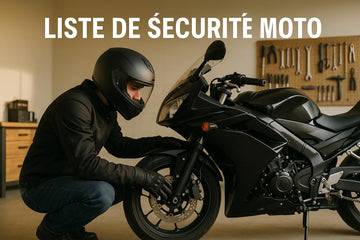
For most bikes, pragmatism wins: good type-approved LED bulbs, well-aimed auxiliary lights and a clean lens already buy you a clear step up in visibility for a fraction of the money. Lighting is only one of the boxes to tick before riding at night, and our 8-point motorcycle safety checklist covers the whole subject.
What are the benefits and the limits of adaptive headlights?
The verdict is clearly positive if you ride at night a lot, but the technology comes with trade-offs:
| Benefits | Limits |
|---|---|
| Lights the inside of bends, fewer dark patches | High cost, essentially reserved for premium models |
| Hazards to the side spotted sooner (gravel, animals, pedestrians) | Few bikes fitted from the factory |
| Less eye strain on long night rides | Fiddly maintenance and calibration on motorized systems |
| Adjusts automatically to speed and load | Complex retrofit, tightly governed by type approval |
And keep one thing in mind: the best lighting in the world improves your odds of missing the obstacle, but it does not remove the risk of going down, and it will not tell a soul if the accident happens on an empty road, at night, with nobody around to see it.
2 min
If you have a fall while riding and do not respond, GeoRide triggers an automatic emergency call in under 2 minutes, day or night, even if your phone is smashed (emergency services dispatched in mainland France, your loved ones alerted everywhere else).

Where GeoRide fits in
Adaptive headlights help you see; GeoRide handles what lighting cannot cover. The GeoRide device is far more than a plain GPS tracker: it carries fall detection that works independently of your phone. If you go down while riding and do not respond, the emergency call goes out automatically in under 2 minutes, and to the right people (tunnel operators in a tunnel, the motorway control room on a motorway, fire or ambulance services anywhere else); that dispatch runs in mainland France, and everywhere else your loved ones are alerted automatically. We break the mechanism down in our article on motorcycle fall detection.
And for the vast majority of rides where nothing goes wrong, the GPS tracker captures your outings: automatic ride recording, riding stats, weather, ride replay. Your loved ones can also be told only when something is wrong, with zero tracking the rest of the time.
"The whole point of GeoRide is to act when there is an emergency, and to leave you relaxed the rest of the time." (Thomas, GeoRide founder)
Whether you ride with a GeoRide 3s or a GeoRide mini, the tracker stays connected 24/7, even with the bike parked, with instant alerts at the slightest suspicious movement. Seeing the road is down to your headlights; protection and assistance are down to GeoRide.
FAQ
Are adaptive headlights legal in Europe?
Yes, adaptive headlights fitted at the factory are type-approved and perfectly legal. They meet European ECE regulations, in particular the cut-off lines that stop oncoming drivers being dazzled. The thing to watch is retrofit kits: lighting without type approval is punishable and can be a nuisance to other road users.
What is the difference between adaptive headlights and auxiliary lights?
Adaptive headlights adjust the beam automatically to lean angle and speed, while auxiliary lights burn brighter but always point at the same place. Auxiliary lights are still a good, affordable, type-approved way to see more at night, they just do not light the inside of a bend as you lean.
Can adaptive headlights be fitted to any motorcycle?
Technically yes, but it is complicated and rarely worth the money. You have to integrate lean angle sensors, a control unit and wiring that suits the bike's electrical system, then make sure the whole lot stays type-approved. If you are set on it, hand the job to a professional; otherwise type-approved LED bulbs already give you a real step up.
Do adaptive headlights dazzle other drivers?
No, not when the system is type-approved: the beam is corrected in height and direction precisely so it stays under the regulation cut-off lines. That is one of the jobs the suspension sensors do, keeping a rear-loaded bike from aiming its headlight skyward. Dazzling is mainly a problem with setups that do not comply.
À lire ensuite