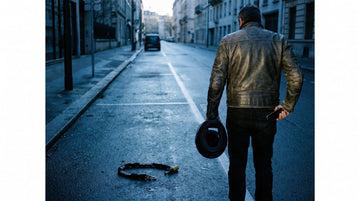

How to choose a smart motorcycle alarm: what really matters
Protect my motorcycle with GeoRide Par Thomas
Choosing a smart motorcycle alarm comes down to three questions: where your bike sleeps (street, garage, underground parking), how you ride, and what you can spend over time. A good smart alarm has to catch the slightest movement, alert you on your phone in real time, pinpoint the bike and stand by you after a theft. Everything else is an option, and it depends on the kind of rider you are.
The key points
- Where you park is the number one criterion: in underground parking, the radar detection of the GeoRide 3s makes all the difference.
- Hold out for multi-channel alerts (push notification, phone call, email) and real-time location, not just noise.
- GeoRide mini (€199, then €5/month) covers the essentials; GeoRide 3s adds radar detection even underground and automatic phone recognition.
- According to the 2026 GeoRide Motorcycle Theft Report (France), more than one theft attempt in two stops the moment the alert goes out.
What makes a motorcycle alarm genuinely smart?
One thing gives it away: a smart motorcycle alarm reaches you on your phone, wherever you are, instead of just screaming where it stands. A traditional alarm relies on noise to wake the neighbors. A smart alarm picks up the vibration or the movement, fires an instant alert at you, then shows you where the bike is in real time.
That is exactly what led to GeoRide. In 2017, Thomas Chambon had his bike stolen the morning he was leaving on a road trip: lock and alarmed disc lock both cut through. He lived two floors up and never heard a thing.
“It drove me crazy that we were using sound to warn people about a problem, when we all carry a phone in our pocket.” (Thomas, GeoRide founder)
GeoRide launched its first connected product in 2018 on that idea: your phone warns you better than a siren ever will. Today, a smart alarm worth the name rests on four building blocks: fine movement detection, instant alerts, a precise GPS tracker and real people to help you if the bike is taken. Take one away and the alarm only does half its job.
Why doesn't a siren on its own cut it any more?
Because thieves don't start bikes any more, they carry them off. According to the Mutuelle des Motards, the French riders' insurer, 90 to 95% of thefts of motorcycles and scooters are lift-away thefts: the bike goes up, into a van, then sits in a stash spot while the thieves wait to see whether it has a GPS tracker on board. A theft takes two and a half minutes on average, and under a minute when the bike is not secured to a fixed point.
Against a battery-powered angle grinder, even a serious U-lock goes in about fifteen seconds per cut. A physical lock still earns its place, it makes the bike harder to carry off and forces the thief to make noise, but it never tells you anything. We break that pairing down in our comparison of a GPS tracker versus a physical lock.
What changes everything is the real-time alert. Warned within seconds of the first jolt, you can act while the bike is still there, without ever facing the thief. And the deterrence is real, not a line in a brochure:
51.7%
of theft attempts stop the moment the alert goes out: the bike is not even moved (2026 GeoRide Motorcycle Theft Report, France, 385 theft alerts analyzed).
Put another way, among riders running a GeoRide, one bike in two gets away before the theft has really started. To stack the odds your way, steer clear of the classic mistakes that make a theft easy too.
Which criteria should you compare before you choose?
Three things separate two smart alarms, or two GPS trackers on the market: how well they detect, how the alert reaches you, and what happens once the bike is gone. Here is the checklist to keep handy:
| Criterion | What to insist on |
|---|---|
| Detection | Vibration, movement, repeated jolts, safe zone exit, power cut |
| Alert channels | Push notification, phone call, email; ideally a critical notification that rings even on Do Not Disturb |
| Tracking | Real time for real: up to 10 positions per second through a corner with GeoRide, where a traditional GPS tracking device sends one point every 5 minutes |
| Underground | Something that still works once GPS stops getting through: Bluetooth radar detection, last known position |
| Built-in battery | The device has to keep transmitting with its wires ripped out, over hundreds of kilometers |
| After the theft | Real people, 24/7, working with the police, not just a dot on a map |
A word on the app, which most people underrate: two devices can look the same on paper and everything plays out in daily use. Detailed alert settings (a phone call at night only, say), sharing with your loved ones, ride history: the app is what you will handle every day, not the device.
Where does your bike sleep? The criterion that settles almost everything
Where you park sets the bar, and it sorts the models out before the budget even enters the picture. Around half of thefts happen in places that feel safe, shared garages and basements at the top of the list. Assuming you are untouchable underground is exactly the trap.
On the street, you want instant alerts on your phone and a GPS tracker quick enough to follow the bike if it moves. In a shared garage or an enclosed garage, same logic, with a welcome bonus: catching the break-in before anyone lays a hand on the bike, which is what the Live Detect accessory on the door gives you, paired with a GeoRide 3s.
Underground parking rewrites the rules: GPS and mobile networks both struggle down there, whatever device you fit. This is where the GeoRide 3s pulls ahead with its radar detection even underground: GPS works as far as the entrance, then the app switches on a Bluetooth radar that walks you right to the bike, network or no network. If the bike is stolen, the police can use that radar themselves. We cover it all in our article on underground location tracking.
One last habit worth checking: your routine. If your day is one stop after another, the automatic phone recognition on the GeoRide 3s disarms the alarm as you walk up and arms it again after 30 seconds of inactivity. The kind of detail you dismiss as a gimmick at first and then refuse to live without.

GeoRide mini or GeoRide 3s: which one is for you?
The GeoRide mini is enough if your bike sleeps on the street or in a private garage and you want the essentials: real-time alerts, precise location, Fall detection. The GeoRide 3s becomes the obvious call if you park underground, if you want the Live accessories or if your vehicle has no battery.

| Criterion | GeoRide mini | GeoRide 3s |
|---|---|---|
| Real-time alerts (push notification, phone call, email) | Yes | Yes |
| Real-time location | Yes | Yes |
| Fall detection, loved ones alerted automatically (Automatic emergency call available in France) | Yes | Yes |
| Underground parking | Tracking as far as the entrance | Radar detection, precise guidance even without network |
| Automatic phone recognition | No | Yes |
| Live accessories (including the 110 dB Live Alarm siren) | No | Yes |
| Vehicle with no battery (dirt bike, small scooter) | No, battery required | Yes, USB charging |
| Purchase | €199, then €5/month | €299, then €5/month |
| Rental (France, Belgium, Italy and Switzerland only) | €9.99/month | €14.99/month |
On the noise side, the smart Live Alarm siren (110 dB, €69) is the audible alarm of the range: it goes off automatically at the slightest unauthorized movement, or on remote activation from the app wherever you happen to be, to send a thief running. It needs a GeoRide 3 or 3s. To dig further into the two devices, read our head-to-head GeoRide mini or GeoRide 3s.
Rental or purchase: what budget should you plan for?
The rule is simple: rental keeps the up-front cost down, purchase costs less over time, and the tipping point sits around two years. If you swap bikes often or want to try GeoRide without committing, rent. If you plan to keep your gear for several years, buy.
On rental, you pay €9.99/month for the GeoRide mini or €14.99/month for the GeoRide 3s, everything included, no commitment, plus a €29 activation fee charged after the first month. Rental ships to France, Belgium, Italy and Switzerland. The hardware comes with a lifetime warranty, and if your bike is stolen and never recovered, a new GeoRide is sent to you free to fit on the next one.
Buy instead and you pay for the device once (€199 or €299), with the first month free and then €5/month, no commitment. The warranty runs 2 years and the hardware is yours.
Either way, the subscription covers the multi-carrier network in more than 200 countries, Fall detection with your loved ones alerted automatically, real-time alerts and free lifetime updates for both the app and the device. The 24/7 Theft Assistance and the Automatic emergency call are available in mainland France. And if the bike goes into winter storage, you can pause the subscription.
Where GeoRide fits in
GeoRide ticks all four building blocks of a smart alarm in a single device that installs in 5 minutes: two wires to the battery, no impact on your manufacturer's warranty. Detection covers the lot, from a single vibration to a power cut, and the GeoRide 3s adds radar detection even underground and automatic phone recognition, while the GeoRide mini stays the most affordable way in. For noise, the Live Alarm fires on remote activation from the app, wherever you are.
And once the alert lands, you are never on your own: Theft Assistance, included in the subscription and available in mainland France, calls you back in under 5 minutes, 24/7, and hands the real-time position to law enforcement. No heroics, no confrontation: a smart alarm exists precisely so you can act without putting yourself in harm's way.
“The point of GeoRide is to act when it's an emergency, and to stop worrying the rest of the time.” (Thomas, GeoRide founder)
FAQ
Which motorcycle alarm should you choose for underground parking?
The GeoRide 3s is the one to go for in underground parking, thanks to its radar detection even underground. GPS works as far as the entrance, then a Bluetooth radar takes over and guides you right to the bike, network or not. If the bike is stolen, the police can use that guidance directly through Theft Assistance, available in mainland France.
Does a smart alarm drain your bike's battery?
No, a GeoRide device draws very little: the bike still starts after long spells off the road. The system only sends positions when it's worth it and drops into smart standby once parked. Its built-in battery takes over if the wires are ripped out, and keeps going for hundreds of kilometers.
Should you rent or buy your smart motorcycle alarm?
Rent if you're only keeping the bike a short while, buy if you plan to hold on to it for more than about two years. Rental (€9.99/month for the mini, €14.99/month for the 3s, in France, Belgium, Italy and Switzerland only) skips the up-front cost and includes a lifetime warranty. Purchase (€199 or €299, then €5/month) pays off over time. Neither comes with a commitment.
Does a smart alarm replace a physical lock?
No, the two work together: the lock slows the thief down and makes the bike awkward to carry off, the smart alarm warns you and locates it. A U-lock on its own gives way in about fifteen seconds to a battery-powered angle grinder, and nobody hears about it. The real-time alert is what lets you act, and it's what stops more than one theft attempt in two, per the 2026 GeoRide Theft Report.
À lire ensuite